Usually a few seconds. You can read on while it loads.
The 3D room is about 4 MB.
Showing pictures: the 3D room couldn’t start on this device.
Dementia PreventionPrevention · live, day 12 of check-ins
HypertensionLong-term condition · approved, day 26 of check-ins
Sleep OptimisationLifestyle · live, day 12 of check-ins
Nearly half of dementia cases could be delayed or prevented.
The 2024 Lancet Commission attributed around 45% of dementia to fourteen modifiable risk factors: hearing, blood pressure, activity, alcohol, smoking, social contact and the rest. Almost none of it is decided in a consulting room. This is the plan GeneralPractice.AI sends for exactly that.
Around 45% of dementia is attributable to fourteen modifiable risk factors (Lancet Commission, 2024). This is the plan for them.
Alan’s plans work together: Dementia Prevention for the ten factors, Hypertension because blood pressure is one of them, and Sleep Optimisation. One assessment, answered at home, built all three.
Dementia PreventionPrevention · live, day 12 of check-ins
HypertensionLong-term condition · approved, day 26 of check-ins
Sleep OptimisationLifestyle · live, day 12 of check-ins
The main plan, close up
Ten factors, turned into daily habits.
Dementia Prevention assesses ten modifiable risk factors, from activity and social contact to hearing and vision. Alan set his goals in his own words, and his check-ins follow from them. Prevention plans go straight to the patient.
Walk with the rambling group twice a week
Ring my sister every Sunday evening
Get my hearing checked before Christmas
Prevention plan · straight to the patient
Every day, at home
Six pillars, and a check-in each day.
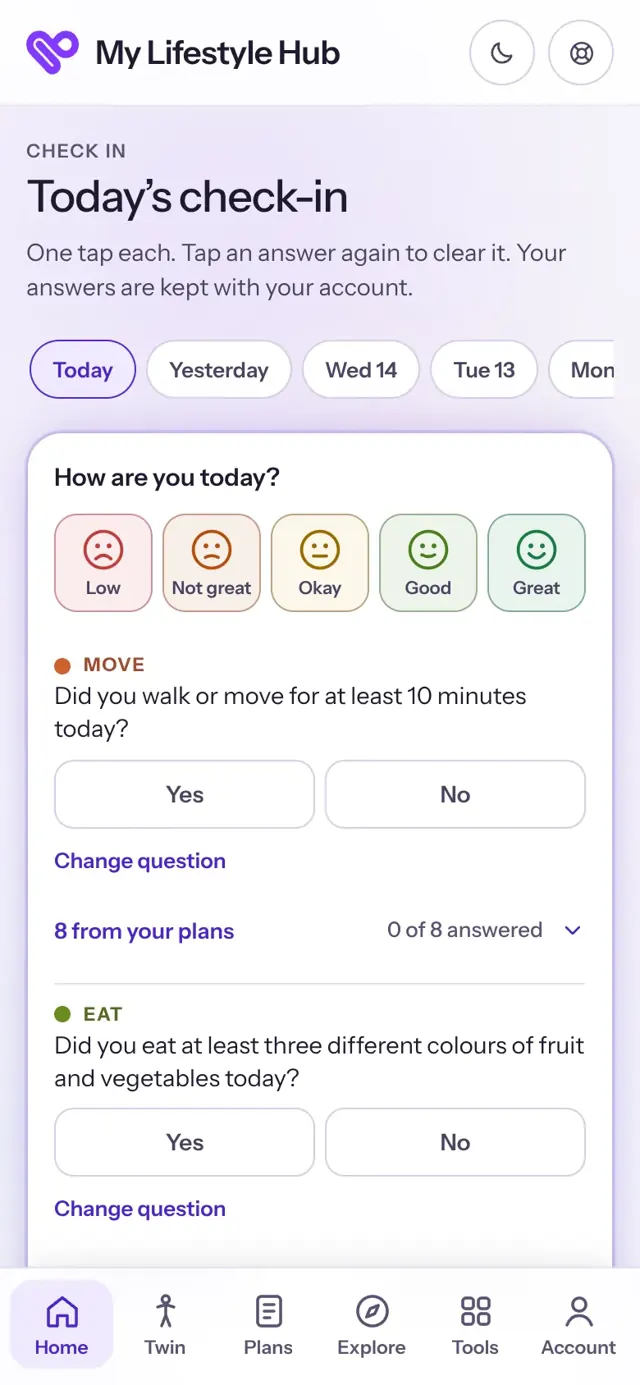
A few taps a day in My Lifestyle Hub, beside the six pillars of lifestyle medicine. Tools such as the Brain Speed Challenge and the MIND diet shopping list go with the plan.
Move
Eat
Sleep
Mind
Substances
Social
Did you speak to or message at least one person today?
Did you walk or move for at least 10 minutes today?
Did you spend at least 5 minutes reading, listening or learning something new today?
At home
Their plans
The main plan
Every day
What the plan assesses
Ten things — and not one of them is in the head alone.
These are the factors the Dementia Prevention plan puts to the patient, in the platform's own words. The brain is downstream of the lungs, the liver, the pancreas and the arteries, which is why a dementia plan reads like a whole-body plan.
SmokingStaying completely smoke free is one of the most important steps you can take to protect your brain health and reduce your risk of developing dementia as you age.
Healthy Body Weight (BMI 18.5–24.9 if applicable)Maintaining a healthy body weight with a BMI in the range of 18.5 to 24.9 if applicable supports brain health and reduces your risk of developing dementia in later life.
Drinks little or no alcoholDrinking little or no alcohol protects your brain health and reduces your risk of developing dementia, as excessive alcohol consumption is directly toxic to brain tissue.
Healthy Blood Pressure (e.g. less than 140/90 mmHg)Keeping your blood pressure at a healthy level, generally below 140/90 mmHg or a lower target if recommended by your healthcare provider, is one of the most effective ways to protect your brain and reduce dementia risk.
Good Blood Sugar Control (HbA1c within target if diabetic)Maintaining good blood sugar control with your HbA1c within target if you have diabetes is important for protecting your brain health and reducing your risk of cognitive decline and dementia.
Strong Social Support / Regular Social ContactMaintaining strong social connections and regular contact with friends, family, and community is important for brain health and can help reduce your risk of developing dementia.
Physically Active (≥150 min moderate or ≥75 min vigorous activity/week)Regular physical activity of at least 150 minutes of moderate intensity or 75 minutes of vigorous intensity exercise per week is one of the most powerful ways to protect your brain and reduce your risk of dementia.
Emotionally Well (low symptoms of depression / anxiety)Maintaining good emotional wellbeing with low symptoms of depression and anxiety supports brain health and may help reduce your risk of developing dementia.
Mentally Stimulating & Meaningful ActivitiesEngaging in mentally stimulating and meaningful activities throughout life helps build cognitive reserve and may reduce your risk of developing dementia or delay its onset.
Protects Hearing & Vision (regular checks, uses aids if needed)Protecting your hearing and vision through regular checks and using aids if needed is important for maintaining brain health and reducing your risk of dementia.
How it reaches them
Twenty minutes of theirs. Under a minute of yours.
You send itOne patient, or a whole recall list, from the dashboard. Nothing to install at their end.
They answer at homeAbout twenty minutes, in their own time and their own words — including the things people do not say across a desk.
You see itScores, goals and any safety flag on one screen. A prevention plan goes straight to them; a plan for a condition, such as Mild Cognitive Impairment, waits for your sign-off.
It becomes dailyShort check-ins in My Lifestyle Hub, medals as habits hold, and a progress summary waiting before the follow-up.
The plan puts ten of the modifiable risk factors to the patient, who answers in about twenty minutes of their own time, in their own words.
Habits, not a leaflet
Short daily check-ins in My Lifestyle Hub, drawn from their own plan, and a medal for each one they keep up.
Apps that go with it
The MIND diet shopping list comes with the plan, and anyone can use the Brain Speed Challenge, a short brain workout in the app. It isn’t a clinical test, or a test for dementia.
When it is more than prevention
Mild Cognitive Impairment & Brain Health Support is a plan for a condition, approved by a clinician before the patient sees it.
Brain and heart, one plan
Dementia Prevention with Hypertension and Type 2 Diabetes in one custom plan of ten factors, with the factors they share asked once.
Reviews show what held
One click sends the review. Their answers come back beside the originals, with the movement in every factor worked out.
Custom plans
Brain and heart, in one plan.
High blood pressure and diabetes are two of the fourteen risk factors. Choose up to four conditions, or single factors from anywhere in the library, and the platform builds one plan of exactly ten factors, asking the ones they share once. Give it a name: that is the name the patient sees in My Lifestyle Hub. On every paid tier.
For example
Dementia PreventionHypertensionType 2 Diabetes
Brain and heartOne plan · ten factors · shared factors asked onceA template, ready to send again
If any of it comes from a plan for a long-term condition, a custom plan waits for a clinician’s approval, like any condition plan.
NewDrafted with AI
Describe a patient by talking or typing, and an AI drafts their custom plan for you to check: a name and goals, the ten factors with the scores it can estimate, and check-ins and resources from your library. Names, dates, numbers, addresses and places are taken out before anything is sent. On every paid tier. How it works
The evidence
What the papers actually say.
Every figure below is read back to its source and links to it. These are the checked findings the research table carries against dementia — the same ones a clinician sees inside the platform.
Dementia Prevention is one of fifty-seven plans in the library. Sign in with your own email and send it: it comes with every paid plan, and Solo and Clinical Unlimited start with a 14-day free trial.
 GeneralPractice.AI